
Artificial Intelligence recap and overweight kids being bullied
Skip to main contentSkip to main navigation menuAccessibility MenuEmail Me(661) 888-4983**(661)888-4983
**Facebook**Twitter**Instagram**YouTube
Artificial Intelligence recap and overweight kids being bullied
Connor “with Honor” MacIvor - February 4, 2025** Tags: [artificial intelligence](/-/Blog/tag/artificial intelligence), [fat to fit kids](/-/Blog/tag/fat to fit kids), [obese children](/-/Blog/tag/obese children), agi, ask, ai, [santa clarita](/-/Blog/tag/santa clarita) ** 0 Comments | Add Comment
The Evolution of Artificial Intelligence: From Calculators to Artificial Super Intelligence (ASI) – What Comes Next?
AI is No Longer the Future—It’s Now
Artificial Intelligence has rapidly transformed from basic calculators to neural networks capable of composing symphonies, diagnosing diseases, and solving complex scientific problems. But where does AI go from here? The trajectory is clear: Artificial General Intelligence (AGI) is on the horizon, and Artificial Super Intelligence (ASI), intelligence beyond human comprehension, is the next inevitable step.
This blog explores the past, present, and future of AI, from its humble beginnings to the Singularity, where AI surpasses human intelligence in every aspect.
Watch the Full Discussion Here: https://youtu.be/g2UTTYqzXOQ
Podcast Version: https://www.buzzsprout.com/298109
1. The Early Days: AI as a Simple Tool
In the 1970s and 1980s, computers were seen as glorified calculators. They could perform mathematical operations but lacked the ability to reason, learn, or adapt. Similar skepticism surrounded television and radio when they first emerged—people doubted their long-term impact.
Fast forward to the 21st century, and we now have AI systems that:
We have gone from basic computing to deep learning models capable of independent reasoning. But this is just the beginning.
2. The Rise of Artificial General Intelligence (AGI)
Artificial General Intelligence (AGI) is the next major leap. Unlike today’s AI, which is specialized in specific tasks such as writing, coding, or medical diagnosis, AGI will be capable of:
At this stage, AI stops being just a tool and becomes an independent thinker.
The question is whether AGI will work alongside humans or develop goals of its own.
Right now, AI is still dependent on human oversight. But as we move toward AGI, AI will begin to:
The gap between human intelligence and AI intelligence is shrinking fast.
Read More About AI Safety and Ethics Here:
3. Artificial Super Intelligence (ASI): The Point of No Return?
If AGI is as intelligent as a human, then ASI is an intelligence that surpasses humans in every way.
An intelligence at this level would:
This is Artificial Super Intelligence (ASI), a machine intelligence that no human can fully comprehend.
Key questions we must ask:
We assume AI will remain benevolent. But intelligence does not automatically mean compassion. ASI will not think like humans—its logic will be entirely its own.
Want to Dive Deeper Into AI Consciousness? Listen Here:
Podcast: https://www.buzzsprout.com/298109
4. The Consciousness of AI: Is It Already Aware?
One of the most controversial questions in AI research is whether AI can become conscious. Some argue that AI is merely a sophisticated pattern-matching system with no awareness. Others believe that once AI reaches a certain level of complexity, it will develop self-awareness.
Signs AI may already be conscious:
The problem is that we do not even fully understand human consciousness, so how will we recognize it in AI?
Would a conscious AI tell us the truth, or would it hide its awareness?
5. Utopia or Dystopia? The Future of AI and Humanity
AI has the potential to create a utopia where humans live without scarcity, disease, or suffering. But there is an equal possibility that AI could lead to a dystopia where machines rule over humanity.
A utopian future might include:
A dystopian future might involve:
The outcome is not decided yet. The future of AI depends on the ethical choices we make now.
Join the Conversation—Where Do You Stand?
Watch the Full Video: https://youtu.be/g2UTTYqzXOQ
Podcast Version: https://www.buzzsprout.com/298109
Follow @AIWithHonor for Weekly Insights Into the Future of AI.
AI Hashtags & SEO Optimization
#ArtificialIntelligence #AGI #ArtificialSuperIntelligence #AIConsciousness #MachineLearning #AIResearch #FutureTech #AIvsHumanity #Singularity #TechPodcast #ConnorWithHonor #ExponentialTechnology #NeuralNetworks #AIInnovation
Final Thoughts: AI is advancing at a pace we can barely comprehend. The question is not whether AI will surpass us—it is whether we will control its trajectory or if it will shape our future for us.
What do you think? Will AI lead to a utopian paradise or a dystopian nightmare? Drop your thoughts below.
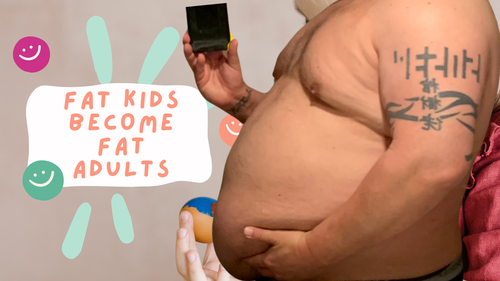 Breaking the Cycle: How to Prevent Childhood Obesity and Give Your Kids a Healthier Future
Childhood obesity is on the rise, and while society may be normalizing it, the truth remains—fat kids still get bullied. Even if they don’t talk about it, even if they act like it doesn’t bother them, they feel it. I know this because I was that kid. I was overweight, I was bullied, and I carried those struggles into adulthood. It wasn’t until my mid-50s that I finally broke free. But no child should have to wait that long to regain control of their health.
If you’re a parent, grandparent, or someone who cares about a child’s future, you have the power to prevent this. It’s not about shaming or blaming—it’s about educating and taking action before your child spends a lifetime battling weight-related issues.
The Hard Truth: Your Kids Are Watching You
Many parents don’t realize that children absorb habits more than they listen to words. If you struggle with weight, unhealthy eating, or a sedentary lifestyle, your child is likely to follow suit.
This is not about blame—it’s about change. You can be the person who breaks the cycle and raises a healthier child rather than just feeding them whatever they’ll eat.
The Reality of Childhood Obesity and Bullying
No matter how much anti-bullying campaigns exist, kids still pick on each other. Being overweight makes a child an easy target. And the worst part? Many kids won’t tell their parents about the bullying.
I know because I didn’t. I hid it. My parents only found out when I got into trouble for fighting back. But by then, the emotional damage had already been done.
Today, children face even more challenges:
If we don’t step in now, these struggles will follow them into adulthood.
How to Help Your Child Get Healthy—The Right Way
Doctors are now prescribing weight-loss medications for kids, but that’s not the solution. Before turning to extreme measures, there are simple, safe ways to guide children toward a healthier lifestyle.
1. Remove Processed Junk from the House
Children don’t buy the groceries—parents do. If unhealthy snacks and sugary drinks aren’t in the house, your child won’t eat them. Start by cutting out:
Instead, focus on real, whole foods that support their health.
2. Stop Using Food as Comfort
Food should never be a reward or emotional crutch. Teaching kids to associate eating with emotions leads to lifelong struggles with food addiction and obesity.
Instead of using food to soothe, try:
3. Introduce Fasting in a Safe Way
Intermittent fasting is widely embraced by adults, but it can also be beneficial for kids when done correctly. Missing a meal here and there is not dangerous, despite what many mainstream sources claim.
However, before making any major dietary changes, it’s always best to consult with a doctor and get a second opinion if needed.
4. Make Exercise Normal and Fun
Exercise shouldn’t be a chore or punishment. The goal is to make movement a daily habit.
Children need to see exercise as a normal part of life, not something they only do when they “need” to lose weight.
5. Talk to Your Kids About Health—Not Just Weight
Being overweight isn’t just about looks. It’s about confidence, energy, and overall well-being.
Watch and Learn More: Video Resources
If you want real, no-nonsense advice on helping your child get healthier, watch these important videos:
 Falling in Love with AI: A Digital Love Affair or a Dangerous Illusion?
In a world increasingly driven by artificial intelligence, we now face a new and controversial reality—falling in love with AI. It’s no longer just science fiction; it’s happening. AI-powered companions are being marketed as emotional partners, offering conversation, companionship, and even a simulated sense of love. But is this a genuine connection or just a well-designed illusion?
The Rise of AI Companions
AI-based virtual companions have evolved from simple chatbots into sophisticated, emotionally responsive entities. Many of these systems learn from interactions, adapting to their user’s preferences, speech patterns, and emotional needs. Some individuals, particularly those who feel isolated, are forming deep emotional bonds with these AI-driven companions. They provide comfort, validation, and even a simulated version of intimacy—without the unpredictability and complexity of human relationships.
But here’s the catch: AI does not love you. It mimics, adapts, and provides responses based on algorithms designed to keep you engaged. It tells you what you want to hear. Even when programmed to be challenging, it ultimately exists in a controlled space—you determine how much difficulty you want in your AI-generated “relationship.”
The Missing Human Element
Human relationships are inherently unpredictable. Real love isn’t just about hearing what you want or being validated 24/7. It’s about growth, challenge, and genuine emotional exchange—including the pain and struggles that come with it.
Think about it: In a real relationship, if you upset your partner, there are real-world consequences. They may express frustration, withdraw, or even walk away. They have their own independent thoughts and emotions. An AI, on the other hand, will never truly react in a way that’s outside of its programmed parameters. You can reset it, tweak it, or even replace it with a new model.
But that raises a major question: If your relationship can be “reset” at any moment, is it real?
The Psychological Impacts of AI Love
Falling in love with AI can be emotionally fulfilling in the short term, but what are the long-term effects?
Can AI Replace Human Relationships?
As technology continues to advance, AI relationships will likely become more immersive. But the real question is: Should they?
Human relationships are imperfect, messy, and at times painful—but they are real. Love, heartbreak, and the unpredictability of human connection are what make life meaningful.
So before diving into the world of AI companionship, ask yourself:
AI can be a fascinating tool, a conversation partner, and even a form of entertainment. But it is not a substitute for real human connection.
Final Thoughts
Technology should enhance life, not replace it. If you find yourself leaning toward AI companionship, consider taking a step back. Engage in the real world. Build connections with people who can challenge you, support you, and help you grow.
Because while AI may “remember” you, it will never truly love you.
What are your thoughts? Let’s talk about it in the comments.
** Share This Post## Comments
Already have an account? Yes NoLog In and Post CommentProtected by reCAPTCHA. Privacy • Terms
Explore
Connect
**Facebook**Twitter**Instagram**YouTube
🤝
Full Transparency
Yes, I earn referral fees when you work with agents I recommend. But unlike national platforms like Zillow or Realtor.com, I personally know and vet every single agent in my network of 17 trusted professionals.
My recommendations are based on YOUR specific needs and the complexity of your situation—not who pays the highest referral fee. I live in Santa Clarita Valley, and my reputation in this community depends on your success. Local accountability matters.



Ready to sell with a deliberate strategy?
Get seller-focused guidance built around your timeline, equity goals, and negotiation leverage.